
21st Century Soundscapes of South Australia
In the course of day-to-day life, very few people apart from inward-looking archaeologists and anthropologists will look at the things around them and imagine a time when such things might no longer be. Frequently on social media such as Facebook or internet forums, there will be “Remember when…” posts which invite contributors and readers to offer their memories of times, places, and things which no longer exist anymore. Most of the time, these posts tend to be about products which can’t be bought anymore, shops or brands which no longer exist, services no longer offered, or other things which were once common but have disappeared into the dust of history.
Very rarely do these memories relate to how the past sounded. Apart from curated television, film and radio programs from history, or the occasional anthropological recording or oral history, there are few popular studies into or mention of how the past sounded. Therefore, as the future hurtles towards us, it is important that a record is provided for our successors to hear how our present sounds.
To this end, it is proposed that researchers should go out to a wide selection of places in South Australia and record a selected duration of the ambient noise at all different times of the day and night. The wider the range, the better. For this, it is proposed places like a busy street corner in Adelaide’s CBD, on a train, in a public park, by the sea, in a shopping centre, at a tourist location, in an office building, etc. The result will be a collection of recordings of how the 21st century in South Australia sounded, in a given year, on a given day, in a given place, at a given time.
For maximum use, the researchers should note the GPS coordinates of where they record or a description of the location, the weather on the day, the time they began and finished recording, and anything else noteworthy to accompany to the recording.
The product of this project will be a paper or essay on what was learned during the making of these soundscapes, the methods used, and what it could be used for in the future. Additionally, the soundscape recordings will be hosted on this Museum’s website.
If you would like to be involved in this as an official Museum Recordist - please visit the Contact page and use the email contact form to let us know!
Soundscapes Archive is Live!
The Soundscapes Archive is now available on this website - Click Here to visit the recordings!
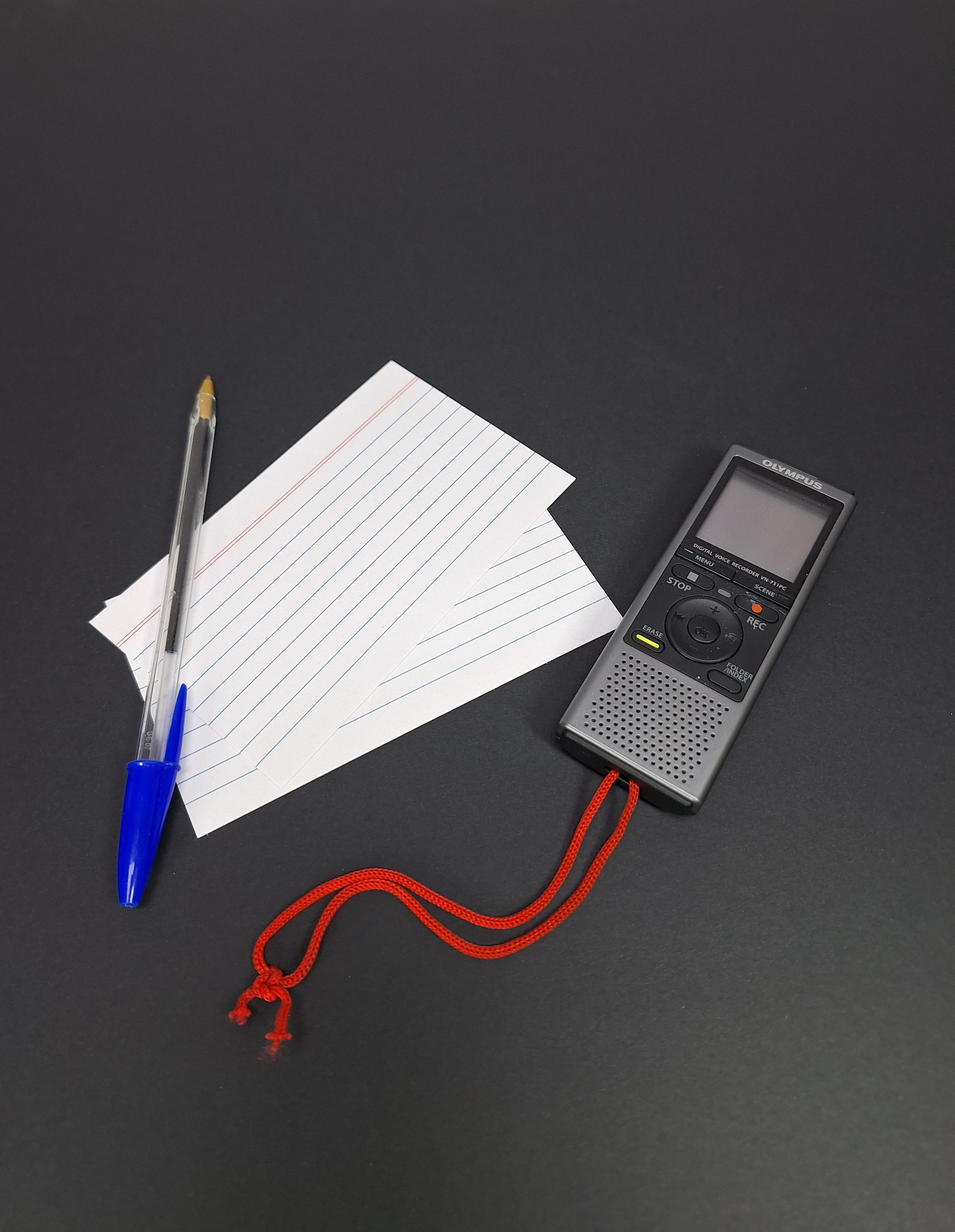
The tools of the trade - a Dictaphone and note cards. Image © Mr Bowden’s Museum 2026.